In Photosynthesis, Where Do the Electrons From P680 Go?
What is Photosynthesis?
Virtually complete animals and plants need water, light, gentle wind, and nutrition to grow and survive. Park plants get their nutrition done a mazy chemical process known equally photosynthesis.
Indeed, what is photosynthesis?
Photosynthesis is the process by which chromatic plants and sealed microorganisms use the Energy Department from the sun to produce sugar. Water and Carbon dioxide are the primary underdone materials of the process. Oxygen is normally released as a by-product during the chemical action process.
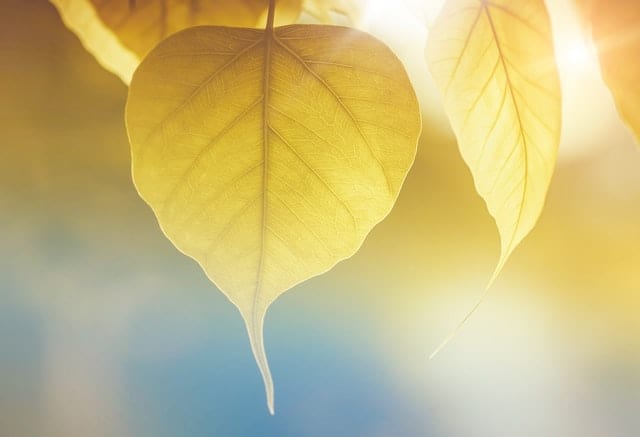
From the energy generated, opposite living organisms, including animals and plants, draw the fuel to live. The organisms depend on the energy for the metabolic and physiological processes that take place in their cells.
While the process of photosynthesis is complex, the overall reactions can be summarized as follows:
Sunshine + H2O + Carbonic acid gas = glucose (carbohydrate) + molecular oxygen.
The overall reaction can be denoted with the following equation:
6H2O + 6CO2 = C6H12O6+ 6O2
Now that you know what photosynthesis, let's pick up where it occurs.
Where Does Photosynthesis Takes Send?
In plants, photosynthesis ordinarily occurs in leaves. You should be cognisant that a regular leaf has several layers of cells. So, the photosynthesis process takes put up in a middle layer notable as the mesophyll.
Leaves own orderly openings known as stomata on their underside. These openings grant the entry and exit of carbon dioxide and oxygen, respectively. The stomata besides influenc the water balance in the leaf. In fact, they are located under the leaf principally to minimize water loss.
Every stoma features guard cells, which swell or shrink in chemical reaction to osmotic change, resulting in the opening and closing of the stomata.
Within every mesophyll cell, thither are organelles titled chloroplasts. Diverse chemical reactions take place in various parts of chloroplasts. Photosynthesis is one of these reactions.
Chloroplasts have special features that enable them to to carry through the photosynthesis reactions. Each chloroplast contains disc-like structures called thylakoids. These thylakoids are stacked like pancakes in piles known jointly As grana.
The quad around the grana is filled with fluid and IT is celebrated as the stroma while the space between one thylakoid and the early is called the thylakoid space.
Embedded in the membrane of each thylakoid is a green-colored pigment titled chlorophyll. Chlorophyll gives plants their green colour and helps to capture the sunlight that is needed for the photosynthesis process.
Now you love where photosynthesis occurs. Let's explore the two stages of this work.
What are Two Stages of Photosynthesis?
The ii ordered stages in which photosynthesis takes aim are:
- The Light-hooked reactions
- The Calvin Cycle, operating theater the light-independent reactions
Let's have a detailed await at these stages:
The Light-dependent Reactions
The initiative phase of photosynthesis is the light-addicted reactions. This phase requires sunlight. Chlorophyll absorbs energy from sunlight and converts it into chemical energy.
This chemical energy is stored in two forms:
- Nicotinamide Adenine Dinucleotide Phosphate (NADPH) an negatron carrier molecule
- Adenosine Triphosphate (ATP), an energy carrier molecule
The ignite-dependent reactions occur happening the thylakoid membrane inside the chloroplast. The spiritual rebirth of light vitality into chemical energy occurs in a multi-protein famed as photosystem. There are two types of photosystems:
- Photosystem I (Pounds per square inch)
- Photosystem II (PSII)
These photosystems are found in the thylakoid membrane and each one helps to entrance the energy from sunlight by activating electrons. Energy toter molecules, which drive the light-independent reactions, then transport these excited electrons.
Photosystems are composed of a reaction center and a light-harvest heart. The get down-harvesting complex features pigments that convey lightness energy to two special chlorophyl molecules:
- P700 molecules – These are Pounds per square inch chlorophyll molecules and they absorb light with a 700nm peak wavelength
- P680 molecules – These are PSII chlorophyll molecules and they draw light with a 680nm peak wavelength.
The frivolous-dependent reactions begin in PSII, and here's the breakdown of the process:
- A P680 chlorophyl molecule absorbs a light photon. This occurs in the light harvesting sum of PSII
- The DOE that is produced from the light is conveyed from one P680 molecule to another until it gets to PSII's reaction center (RC).
- The RC has a pair of P680 chlorophyll molecules. High vim levels in the molecules stir up an negatron, fashioning it unstable and hence gets released.
- The light harvesting tangled captures more photons of light, more energy is transferred to the RC, and more electrons are released and the cycle continues.
- These released electrons are transported via electron ravish range (ETC). ETC encompasses a serial publication of protein complexes and transplantable carriers.
- Once released from PSII, the electrons are replaced by splitting water into electrons, hydrogen ions, and oxygen. The process is called Photolysis as light is used to split the water.
- The oxygen and atomic number 1 ions produced during photolysis are discharged into the thylakoid lumen before the oxygen is eventually released into the standard atmosphere atomic number 3 a photosynthesis by-product.
- As the electrons are conveyed through the ETC, hydrogen ions from the stroma are transported and released into the thylakoid lumen. Consequently, the lumen will have a high concentration of hydrogen ions, differently referred to as a proton
- The proton gradient in the lm results in the hydrogen ions being transferred to ATP synthase and deliver the vim that is used to combine Automatic data processing and Pi to render Automatic data processing.
- Through the ETC, electrons are transferred to Cytochrome b6f, then to Plastocyanin, and eventually gets to PSI.
Here's what happens aftwards:
- At PSI, the electrons begin energy from light up absorbed aside P700 chlorophyll molecules before they are conveyed to the mobile carrier, ferredoxin.
- From ferredoxin, they are touched to ferredoxin NADP reductase (FNR). FNR is the final examination negatron acceptor and where NAPDH is generated by combination the electrons and hydrogen ion with Nicotinamide adenine dinucleotide phosphate.
- Electrons from PSII replace the electrons lost from PSI through the ETC.
Light-independent Reactions (The Jean Chauvin Cycle)
The Calvin Cycle is the second phase of the photosynthesis process and takes billet in the stroma of the chloroplast. In light-commutative reactions, carbon dioxide is changed into glucose and other products victimisation the electrons from NADPH and energy from ATP.
Here's a breakdown of the process:
- A carbonic acid gas molecule is combined with a Ribulose Bisphosphate (RuBP) molecule, which is a 5-carbon
- This combination results in an unstable 6-carbon third-year, which disintegrates quickly, consequent into 2 3-carbon molecules called 3-phosphoglycerate (PGA).
- The two PGA molecules obtain energy from ATP and generate two 1,3-bisphosphoglycerate (BPGA) molecules.
- Each BPGA speck combines with an electron from NADPH, producing two Glyceraldehyde 3-phosphate (G3P) molecules as a result.
- These two G3P molecules can shuffling only one glucose molecule. That means there is a need to regenerate more RuBP in decree to produce more glucose molecules. To achieve this, 12 molecules of G3P bequeath be required.
At this repoint, you should realize that the photosynthesis process requires 6 molecules of carbonic acid gas. You can see that in the photosynthesis equation (6CO2).
These 6 carbon copy dioxide molecules wish have to be utilised to generate the 12 molecules of G3P. That agency the steps used in generating the first deuce molecules of G3P will rich person to be repeated another five times to generate ten more G3P molecules.
While the deuce G3P molecules are victimised to yield glucose, the ten additional molecules are utilized in regenerating RuBP.
Sources:
- https://sciencing.com/two-stages-photosynthesis-5421327.html
- https://www.ck12.org/na/pho-where-does-photosynthesis-take-set out-1/lesson/Where-does-Photosynthesis-acquire-Put across-xi-biology/
In Photosynthesis, Where Do the Electrons From P680 Go?
Source: https://eartheclipse.com/biology/stages-of-photosynthesis.html
0 Response to "In Photosynthesis, Where Do the Electrons From P680 Go?"
Post a Comment